
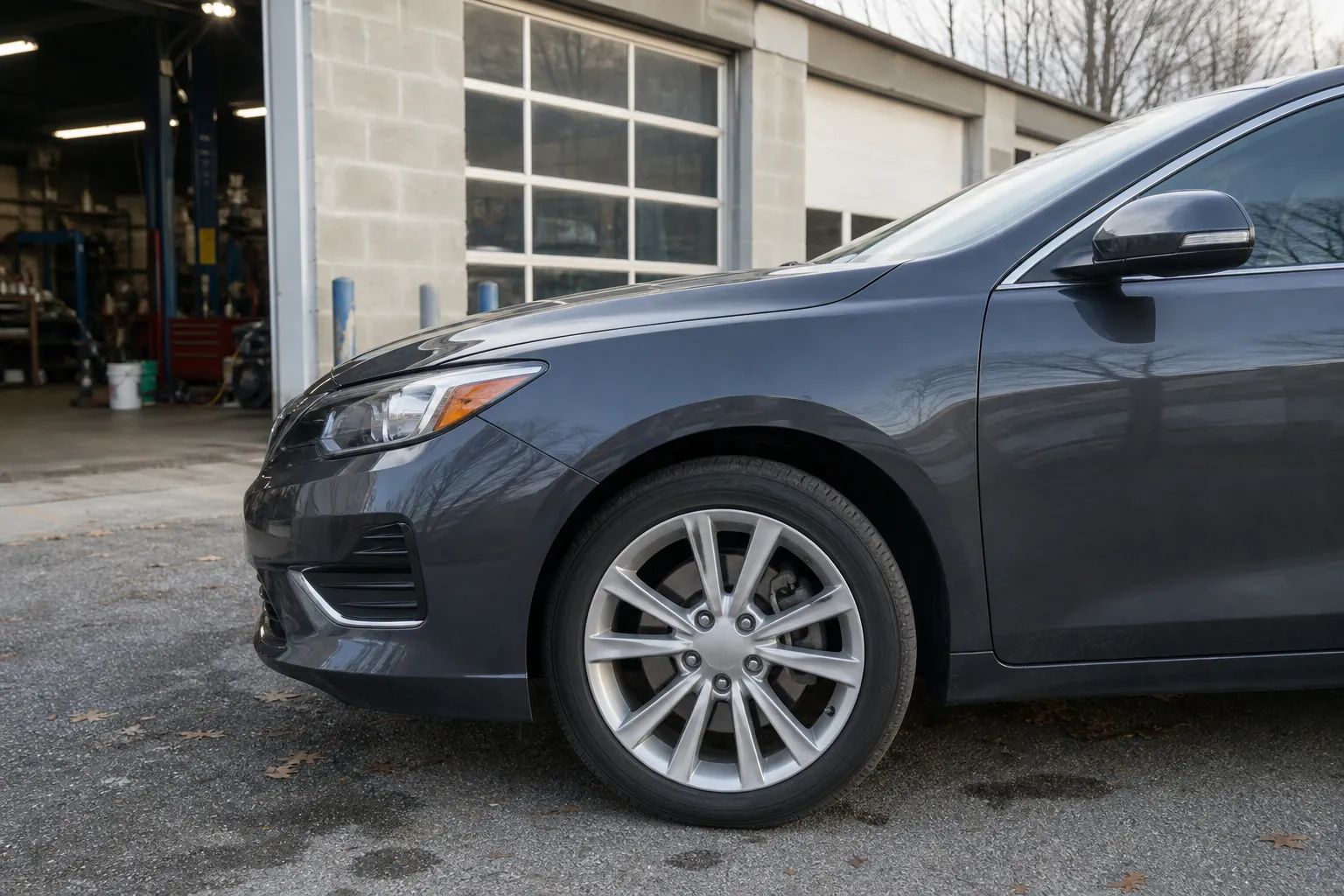
A car that shakes when braking is worth paying attention to, even when it still stops. The useful first question is not “What part do I need?” It is “What exactly is the car doing?” A vibration that comes through the steering wheel can feel different from a pulse in the brake pedal or a shudder through the seat. The speed, brake pressure, and timing all help turn a vague concern into a useful starting point.
Because braking, tires, wheels, steering, and suspension all work together, an online description cannot confirm a repair. It can, however, help you make a safer decision about driving and give a technician a clearer picture. R&C can talk through a brake or handling concern before you come in, then inspect the vehicle instead of guessing from one symptom.
Start with the safety check
Some brake symptoms are reasons to stop driving rather than wait for a convenient appointment. If the brake pedal suddenly sinks, feels unusually soft, takes much more pressure than normal, or the car does not slow down as expected, pull over safely and arrange assistance. The same applies if the vehicle pulls sharply under braking, you see a brake warning light, you smell burning, hear severe grinding, or notice smoke near a wheel.
A light vibration that appears only during braking is different from an immediate emergency, but it still deserves prompt attention. A small concern can become harder to diagnose when it is left until the vehicle has changed further. If your car has an open safety recall, use the NHTSA recall lookup with the vehicle identification number before scheduling work, since recall repairs are handled through the manufacturer.
Where do you feel the shake?
The location of the vibration is one of the most helpful details you can bring to an inspection. Do not worry about naming a part. Just pay attention to what moves or feels different when you press the brake.
- Brake pedal pulse: You feel a repeating push or flutter under your foot while slowing down.
- Steering wheel shake: The wheel moves or shimmies in your hands, often more noticeably at certain speeds.
- Seat or floor vibration: The shake feels like it comes through the body of the car rather than the steering wheel.
- Whole-vehicle shudder: The car seems to tremble, sometimes with a noise, pull, or change in the way the pedal feels.
These descriptions do not diagnose the issue by themselves. They do help separate a braking-only symptom from a vibration that also happens while cruising, accelerating, or idling. That distinction is useful when you call the shop or when you bring the car in.
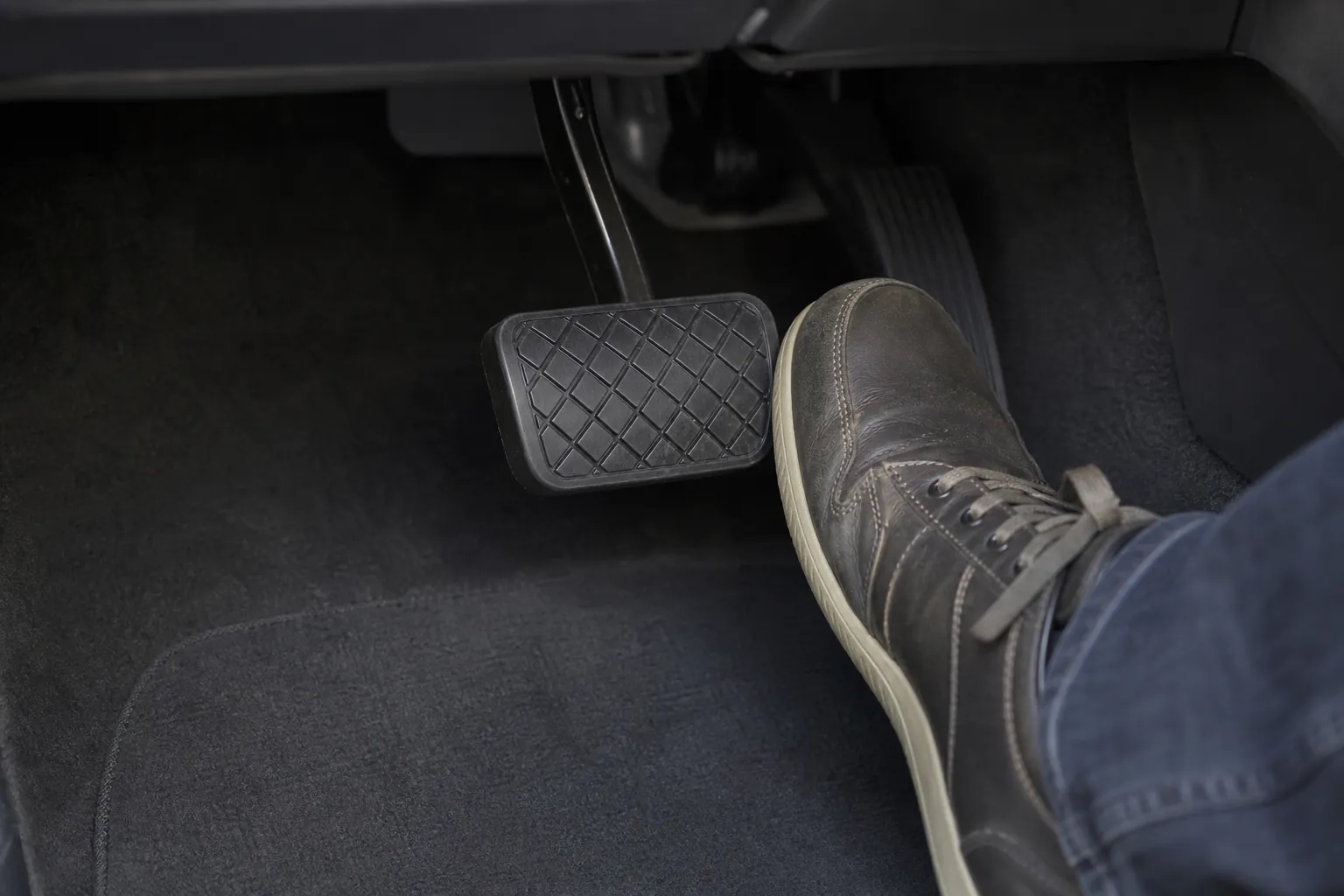
Notice when the vibration happens
Try to notice the conditions without testing the vehicle aggressively. Is the shake there every time you brake, or only on a highway exit? Does it begin during a gentle stop, only with firmer pressure, or after a longer drive? Does the car pull left or right? Does the steering wheel shake while the pedal feels normal? A short list in your phone is enough.
It also helps to separate “only while braking” from “all the time.” If the car vibrates at cruising speed, when turning, or over a particular road surface, tire, wheel, steering, or suspension conditions may be part of the picture. The National Highway Traffic Safety Administration’s tire safety guidance is a useful reminder that tire condition, pressure, and visible damage are basic safety checks, but an inspection is still the right next step for a new vibration.
What can cause a vibration during braking?
Brake-related shaking often leads people to focus on one part. In reality, the vehicle needs a complete check. Brake discs, pads, calipers, wheel and tire condition, wheel mounting, and front-end parts can all affect how the car feels under braking. Heat, wear, uneven contact, a sticking component, damage from a pothole, or a separate handling issue can change the symptom.
That is why “replace the rotors” is not a reliable answer from a search result alone. A good inspection checks what is actually present on your vehicle, measures what needs measuring, and connects the finding to the symptom you reported. It also avoids overlooking a tire or steering concern that happens to show up when braking transfers weight toward the front of the car.
Why speed and road conditions matter
A useful symptom report includes the speed range where the shake appears. A vibration that starts only after highway driving may feel very different from one you notice at neighborhood speeds. A smooth road can make a pattern easier to describe, while rough pavement can make it harder to separate a vehicle vibration from the road itself. You do not need to recreate the symptom or test the limits of the vehicle. Just notice the normal driving conditions where it occurs.
Write down whether the problem changes after the car has been sitting, after a longer drive, in rain, or after the brakes have been used repeatedly. Notice whether it fades as the car slows, becomes more noticeable with firmer braking, or is present even when you coast. Those details help a technician decide whether to begin with a brake inspection, wheel and tire check, or a broader look at steering and suspension parts.
What a careful inspection should sort out
A technician starts by confirming the concern as safely as possible and checking the basics around the affected wheels. That can include looking at brake components, checking the condition of tires and wheels, inspecting mounting surfaces, and looking for signs of uneven wear, damage, or a component that is not moving as it should. The inspection may also include a look at steering and suspension parts when the symptom points in that direction.
The repair recommendation should explain what was found, why it connects to the shake you feel, and what should happen after the work is complete. Ask whether there are related parts that need attention now, whether there is a safety reason to avoid driving, and whether the shop expects a follow-up check. Clear answers are more useful than a list of parts without context.
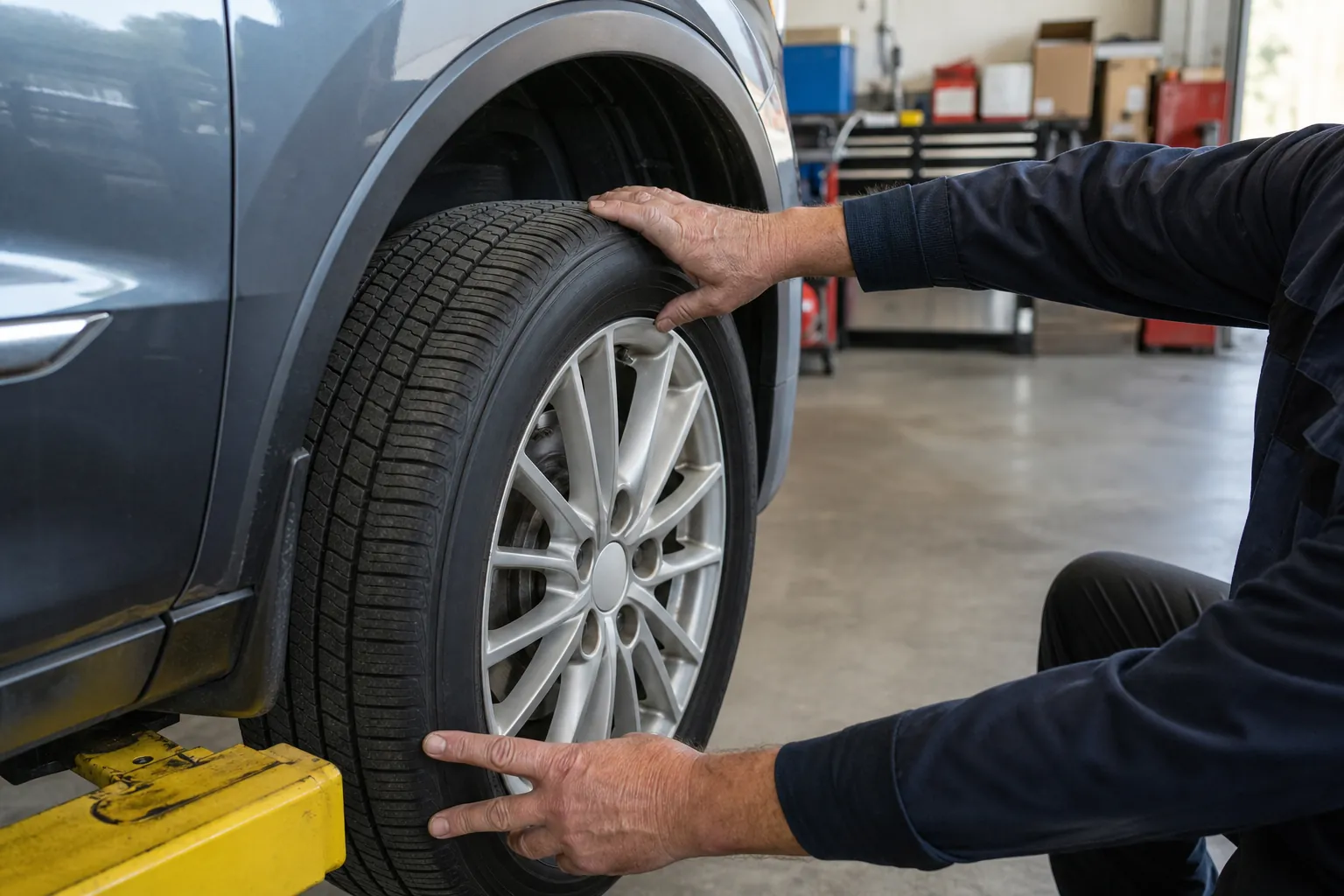
Do a quick walk-around, not a driveway repair
Before calling, you can make a few observations safely. Look for an obviously low tire, a damaged sidewall, a loose-looking wheel cover, fluid on the ground, or a wheel that seems unusually hot after a drive. Do not touch a wheel or brake part after driving, and do not remove a wheel or take apart brake components unless you are trained and equipped to do the job safely.
Check the dashboard as well. A brake, ABS, tire-pressure, or other warning light changes the urgency of the conversation. If your vehicle has a tire-pressure warning, follow the manufacturer’s instructions and inspect the tire condition. The goal is not to confirm a diagnosis from the driveway. It is to decide whether the vehicle should be driven, towed, or seen soon.
What not to do when the car shakes under braking
Do not assume a vibration will disappear if you keep driving long enough. Avoid putting off a new or worsening symptom until the next routine service. It is also wise to avoid repeated hard-braking tests, high-speed experiments, or attempting a brake repair without the right tools and training. Brakes are a safety system, and a car that feels unpredictable while slowing down needs a measured response.
Be cautious with one-size-fits-all advice from videos and forums. Two vehicles can feel similar to the driver but have different causes. A brake part may be visibly worn, while another vehicle has a wheel, tire, or front-end concern that is most noticeable when braking. An in-person inspection protects you from buying the wrong repair and missing the actual issue.
Keep the symptom from becoming a surprise
Routine service does not prevent every brake or handling concern, but it gives the shop a chance to spot changes before they become obvious in the driver’s seat. Mention any new noise, pull, vibration, uneven tire wear, warning light, or change in pedal feel during a regular service visit. A small observation is often more useful than trying to decide whether the car is “bad enough” to mention.
When you pick up the vehicle after a brake, tire, alignment, or steering repair, ask what should feel different and what would be worth calling about. Keep the paperwork with the date and mileage, especially if the symptom returns. That history gives the shop context without forcing you to remember every detail later. It also makes it easier to separate a new issue from something that was already present.
North Shore driving can include stop-and-go traffic, uneven pavement, potholes, and long highway runs. Those conditions do not tell you what is wrong, but they are useful context when a vibration begins. Pair that context with the basics: where you feel it, when it happens, whether it changes with speed, and whether any warning lights or noises appear. That is a solid starting point for a clear inspection conversation.
What to tell the shop
A short, specific description saves time. When you call R&C, share the year, make, and model, then explain when the shake starts, where you feel it, and what else changed. Mention recent tire work, a pothole hit, a collision, brake work, or warning lights if any of those apply. Let the team know whether the car pulls, makes noise, or has a pedal that feels different.
For a new symptom after a collision or impact, it is also reasonable to review the shop’s repair services and schedule a look rather than assuming the concern is only cosmetic. A car can drive differently after damage even when the first thing you notice is a vibration.
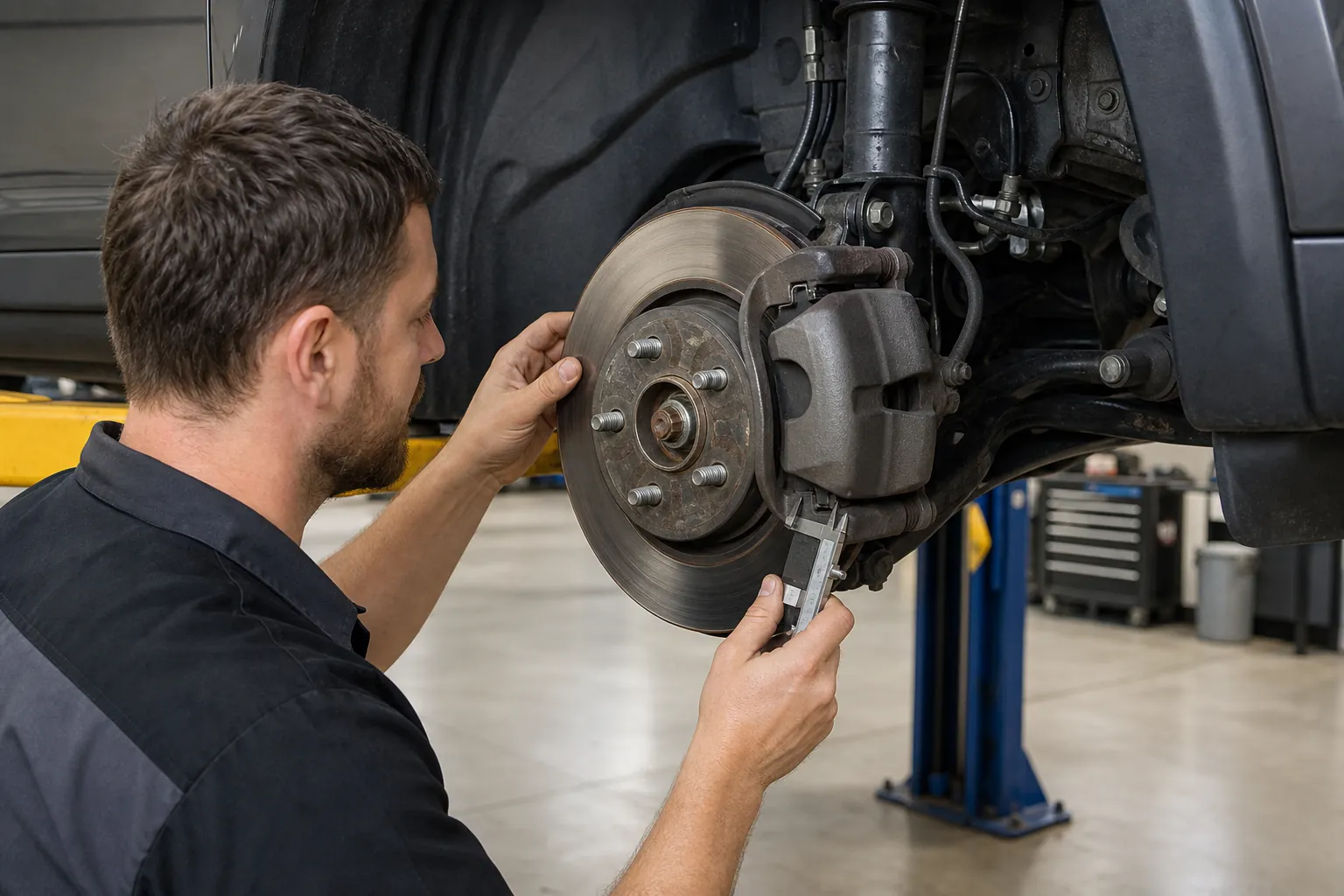
How R&C can help
R&C Auto Services helps North Shore drivers sort out brake, tire, alignment, diagnostic, and mechanical concerns with a clear conversation first. If your car shakes when braking, the shop can inspect the vehicle and explain what the findings mean before you decide on the next step. That approach matters because the same feeling can come from more than one area of the car.
For a planned visit, the before-your-visit checklist can help you organize the details that matter. If the symptom feels urgent, call directly instead of waiting on a form. You can also read what local drivers say about the team’s explanations and careful work on the reviews page.
A new brake vibration is a good reason to call.
Describe what you feel, when it happens, and whether the car pulls, makes noise, or shows a warning light. The shop can help you choose the right next step.
Frequently asked questions
Why does my car shake when I brake?
A vibration while braking can come from the brake system, wheel and tire condition, steering or suspension parts, or how those systems interact. The pattern matters: note whether you feel it in the pedal, steering wheel, seat, or whole vehicle, and whether it happens only at certain speeds.
Can worn brake pads make a car shake?
Worn pads are one possible part of a brake concern, but a vibration does not identify the cause by itself. A shop needs to inspect the pads along with the rotors, calipers, tires, wheels, and related components before recommending a repair.
Is it safe to drive when my car shakes while braking?
Do not treat a new or worsening brake vibration as normal. If braking feels weak, the pedal behaves unusually, the vehicle pulls sharply, a warning light is on, or you smell smoke or burning, stop driving and arrange help. For a mild but repeatable vibration, schedule an inspection soon.
Why does my steering wheel shake only when I brake?
A steering-wheel shake during braking often points attention toward the front of the vehicle, but it still needs an inspection rather than a guess. Describe the speed, pressure, and road conditions that bring it on so the technician can narrow the check.
Related posts

Steering-wheel shake
Steering Wheel Shakes When Braking? What It Can Mean
Learn what to notice when the vibration comes through your hands during a stop.

Vehicle pull
Car Pulls When Braking? What to Notice First
Find out what details matter when the car moves left or right during a stop.

Acceleration shake
Car Shakes When Accelerating? What to Notice First
Use the timing and location of a vibration to describe the concern clearly.