Tires and alignment
Wheel alignment service for North Shore drivers.
A vehicle that pulls, drifts, wears tires unevenly, or no longer feels right on the road is a good reason to call. R&C starts with the way the car is behaving, then helps you choose the right next step.
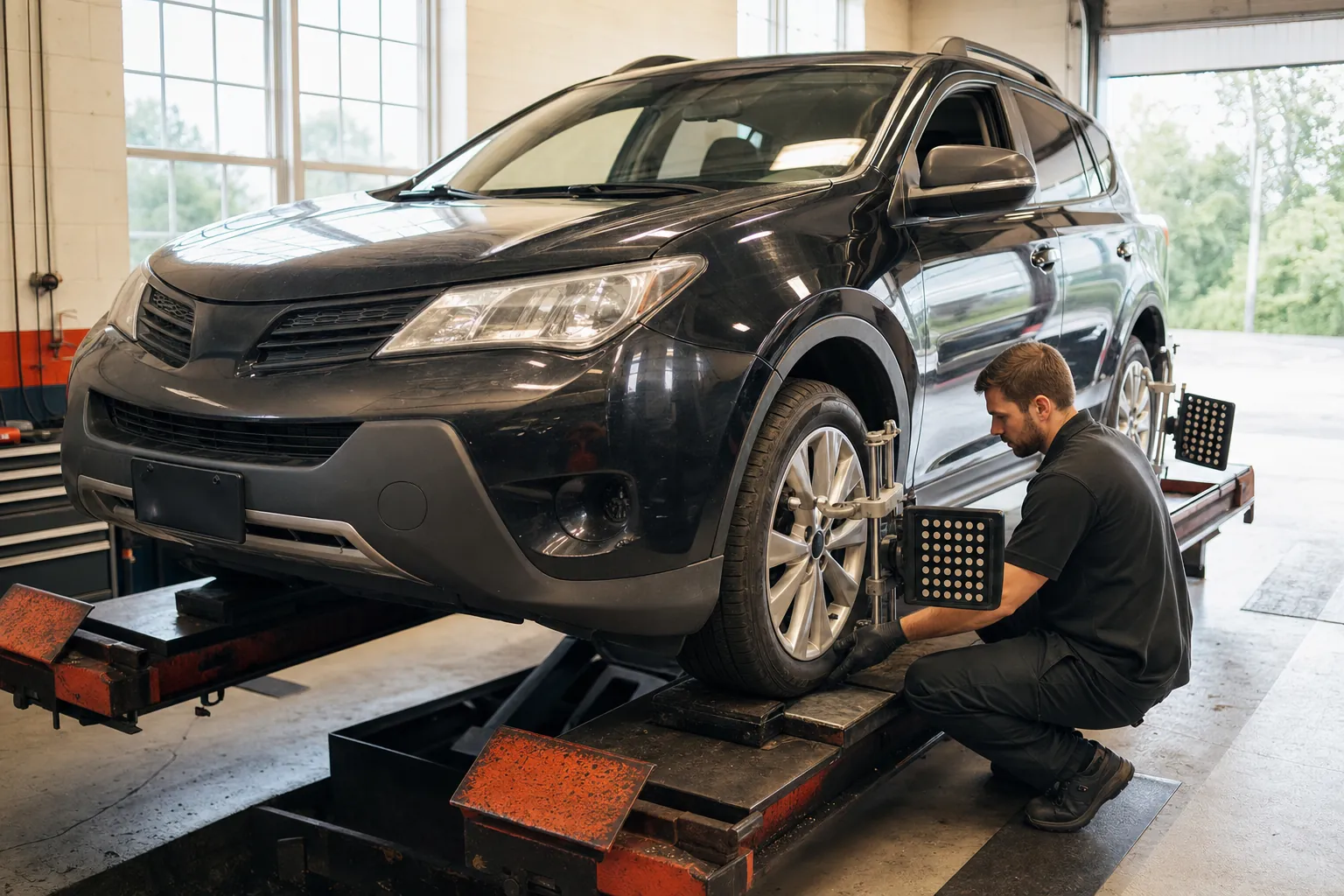
Start with road feel
A handling change is worth describing before you name the repair.
Tires, wheels, steering, suspension, and alignment all affect how a vehicle feels. The first useful step is noticing what changed.
Drivers often recognize a handling concern before they know the word alignment applies. The car may want to move to one side of the lane. The steering wheel may sit off center while the vehicle travels straight. The ride may feel less settled after a pothole, curb strike, or rough stretch of road. Or you may notice that one tire is wearing differently from the others.
Those details matter because they help the shop begin with the condition in front of you, not a guess. R&C Auto Services helps North Shore drivers talk through tire, alignment, and road-feel concerns before deciding what service is needed. Share what you feel in the steering wheel, how the vehicle tracks, when the issue began, and whether anything recently happened that could be connected.
The goal is not to turn every handling issue into an alignment appointment without a closer look. It is to give the inspection the right starting point, then explain what was found so you can make a confident decision about your car.
When to call
Notice the patterns that make the vehicle feel different.
A vehicle can drive differently for many reasons, but a repeatable change in tracking, steering, or tire wear deserves attention. You do not need to decide whether it is a tire, wheel, alignment, or suspension issue before calling. Describe the pattern and let the vehicle be checked.
- The vehicle pulls, drifts, or needs frequent steering correction on a straight, level road.
- The steering wheel is off center when the car is traveling straight.
- One or more tires show uneven, faster-than-expected, or unusual wear.
- The car began feeling different after a pothole, curb strike, collision, or rough-road impact.
- You notice wandering, a clunk, vibration, a pull while braking, or a change after tire work.
If the vehicle suddenly pulls hard, a tire is visibly low or damaged, the steering feels loose, or the car is difficult to control, do not keep driving to see whether the concern goes away. Stop when it is safe and arrange help. A phone call can help you decide how to proceed, but a serious handling change deserves a safety-minded response.
What alignment addresses
Check the whole road-feel concern before choosing the work.
Wheel alignment concerns the angles that guide how the tires meet the road and how the vehicle tracks. When those angles are out of the range the vehicle needs, the car may not travel straight as easily and the tires may wear in an uneven pattern. But the feeling of a pull or an off-center steering wheel does not confirm alignment on its own.
Tire pressure and condition, wheel damage, balance concerns, steering and suspension wear, brake drag, and impact damage can also change the way a vehicle feels. A careful inspection considers the symptom and the related components so the shop can explain whether alignment is the right repair, whether another issue needs attention first, or whether several conditions are contributing to the concern.
That is why it helps to describe the road, speed, steering input, and any recent impact or repair that seems connected. The vehicle may need a straightforward alignment service, or the inspection may point to a tire, wheel, brake, or front-end condition that needs to be addressed alongside it.
Before you call
Give the shop the details that make the handling pattern clearer.
Share the year, make, and model of the vehicle. Then describe when the concern appears. Does the car pull only while braking, at highway speed, after the tires warm up, or all the time? Does it happen on a particular road, after a bump, while turning, or only when you let go of the steering wheel?
Look at the tires from the outside and mention anything you can safely see, such as a low tire, uneven tread, obvious sidewall damage, or a tire-pressure warning light. Mention recent tire work, an alignment, a collision, curb strike, or pothole impact. You do not need to know what caused the issue. Those details help the team know where to begin.
Call (781) 718-9611Making the decision
Understand what the recommendation is meant to correct.
An alignment service should leave you with a clearer picture of the vehicle's road feel and the condition that needs attention.
After the vehicle has been checked, ask the shop to explain what it found in plain language. Is the concern related to the alignment angles, tire condition, wheel damage, steering or suspension components, or something else? Does anything need to be repaired before an alignment can hold as intended? Is there a safety concern, or can the work be scheduled?
Those questions are especially useful when you are trying to protect a newer set of tires. Uneven tire wear can shorten the useful life of a tire, but replacing tires without understanding why the earlier set wore unevenly can leave the original issue unaddressed. A careful inspection gives you a better basis for deciding what to do now and what to monitor.
R&C's approach begins with the concern you are actually feeling. Once the vehicle has been inspected, you can decide with more context than a generic recommendation or a guess based on the steering wheel position. That makes it easier to understand both the immediate repair and the habits that may help you notice a future road-feel change sooner.
Connected systems
Tires, brakes, steering, and suspension can affect the same symptom.
A vehicle can feel unsettled for more than one reason, so it helps to keep the full picture in view.
Road feel is shared across several systems. Tires are the first point of contact with the road. Wheels need to be in good condition and mounted correctly. Steering and suspension parts guide the tires and help the vehicle respond predictably. Brake concerns can also make a pull or vibration more noticeable when the vehicle slows down. The symptom should guide the inspection, not a single assumed repair.
For example, a vibration that is present while cruising may need a tire or wheel check, while a shake that happens only when slowing down may call for a closer brake inspection. A vehicle that wandered after a pothole strike may need more than an alignment if a tire, wheel, or front-end part was damaged. Clear details about when the issue appears help separate those paths.
R&C handles tires, mechanical service, diagnostics, and brake concerns, so you can start by describing what the vehicle is doing. If you feel a pull, shake, or pedal change while slowing down, the shop's brake repair page explains what information is useful to share before an inspection.
Frequently asked questions
Common questions about wheel alignment.
What are common signs that a vehicle may need wheel alignment?
A pull or drift, an off-center steering wheel, uneven tire wear, a change after a pothole or curb strike, or a vehicle that no longer feels settled on a straight road can all be useful reasons to have the vehicle checked.
Will wheel alignment fix every vibration?
Not necessarily. A vibration can involve tires, wheels, brake components, steering, suspension, or another condition. An inspection helps identify whether alignment is part of the issue before work is recommended.
Do I need an alignment after replacing tires?
New tires do not automatically prove that an alignment is needed, but checking the vehicle is sensible when there is uneven previous tire wear, a pull, an off-center wheel, or a handling concern. The vehicle condition should guide the recommendation.
What should I tell the shop about a handling concern?
Share the year, make, and model, then describe whether the car pulls, drifts, wanders, shakes, or has uneven tire wear. Mention a pothole, curb strike, collision, recent tire work, or any noise or vibration that appears while braking or turning.
Talk to the shop