
Electrical and battery concerns
Auto electrical repair for North Shore drivers.
A no-start, weak battery, charging warning light, dimming lights, or electrical problem is a good reason to call. R&C starts with what changed, then helps you choose the right next step.
Start with what changed
Electrical concerns are easier to explain when you focus on the pattern.
You do not need to know whether the issue is the battery, charging system, a connection, or something else before you call.
Many electrical concerns start with a small change that is hard to name. The car may crank more slowly than usual. The lights may look dim at idle and brighten as you drive. A battery or charging warning light may appear. A window, radio, power lock, or another electrical feature may work sometimes and then stop. Or the vehicle may not start after it has been parked, even though it was fine the day before.
Those observations are useful because they help the shop begin with the vehicle's actual behavior instead of a guessed part. R&C Auto Services helps North Shore drivers talk through battery, starting, charging, and related electrical concerns before deciding what repair is needed. Share when the problem occurs, what the dashboard shows, whether the vehicle starts, and whether anything changed shortly before the concern began.
Electrical problems can be intermittent. A vehicle may start normally at the shop after refusing to start at home. A warning light may appear only after a longer drive. An accessory may cut out only on rough roads or in wet weather. The more clearly you can describe the pattern, the better the inspection can start when the vehicle arrives.
When to call
A starting or charging change is worth checking before it strands you.
A vehicle can have an electrical concern without being completely unable to drive, but a repeatable change in starting, charging, warning lights, or powered features deserves a conversation. You do not need to decide which system is responsible. Describe what you are seeing and let the vehicle be checked.
- The engine cranks slowly, needs a jump-start, clicks without starting, or will not start.
- A battery, charging, or other new warning light appears on the dashboard.
- Headlights, interior lights, or the instrument panel dim, flicker, or behave differently.
- A power window, lock, wiper, blower, radio, or another electrical feature stops working or works only sometimes.
- The issue began after battery work, a jump-start, water exposure, a long period parked, or a recent repair.
If you smell burning, see smoke, notice hot wiring or melted material, the vehicle loses power while driving, or the steering and braking feel unsafe, stop when it is safe and arrange help. A phone call can help with next steps, but a serious change deserves a safety-minded response.
A useful inspection
Find the condition behind the symptom before choosing the repair.
It is tempting to treat a weak battery or warning light as a direct instruction to replace one part. Sometimes the battery is the issue. Other times, the starting and charging system, battery connections, wiring, a fuse, an accessory, or another related condition needs closer attention. The point of the inspection is to connect the symptom to what is actually present on the vehicle.
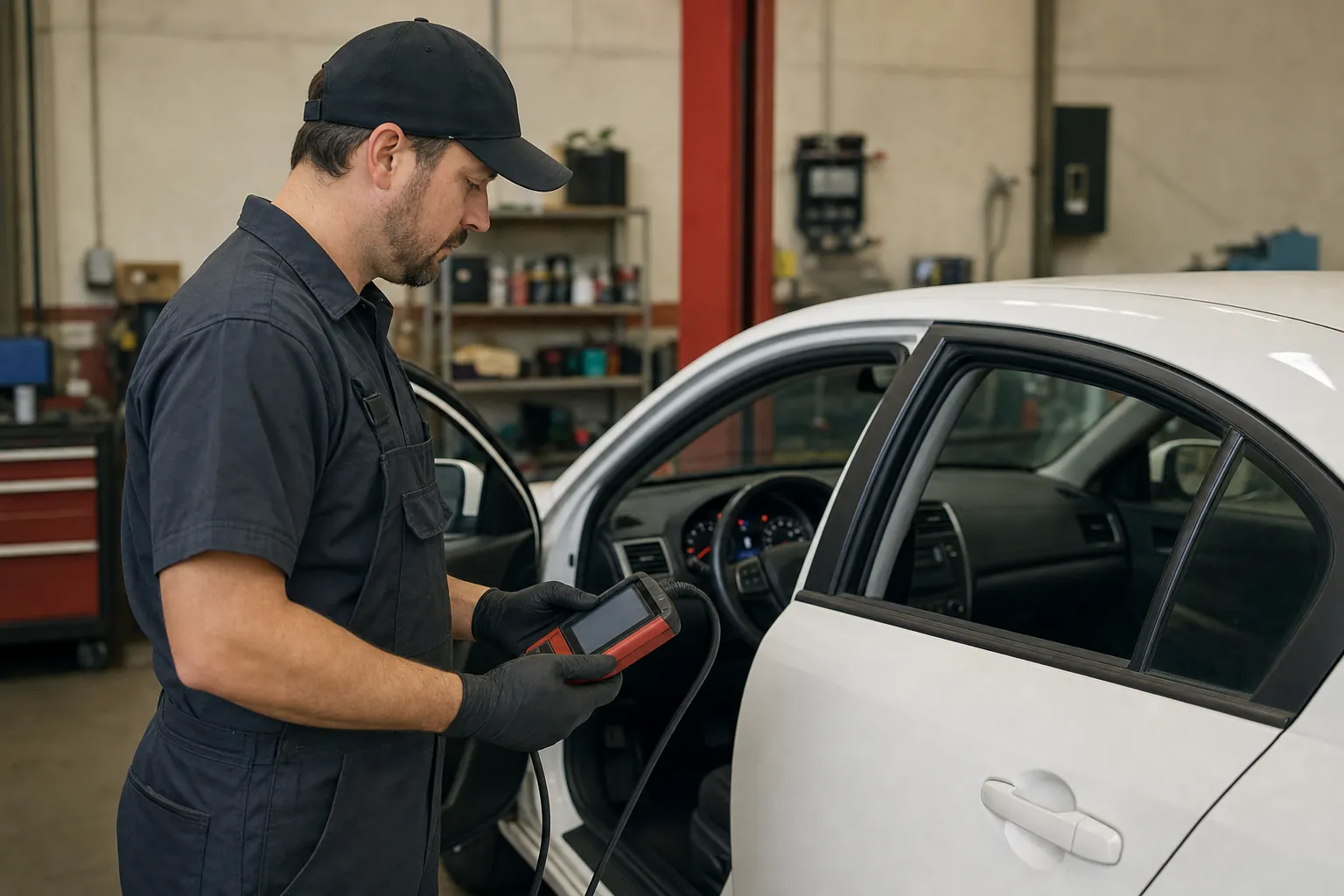
The process can begin with the concern you reported, the vehicle information available through diagnostic equipment, visible checks, and testing of the systems related to starting and charging. Depending on the symptom, the shop may need to consider how the vehicle holds a charge, whether it is charging as expected, whether a connection is secure, or whether another electrical condition is affecting the same result.
That broader view helps you avoid approving a repair that does not address the reason you called. Once the vehicle has been checked, ask what was found, how it connects to the concern, and whether the vehicle needs attention now or can be scheduled. A clear explanation is more useful than a part name without context.
Before you call
Give the shop the details that make the electrical pattern clearer.
Share the year, make, and model of the vehicle. Then describe exactly what happens when you turn the key or press the start button. Does the engine crank slowly, click, start and stall, or do nothing? Does the concern appear after the car sits overnight, after a short errand, while idling, or during a longer drive?
Mention every warning light, dimming light, unusual sound, burning smell, recent jump-start, battery replacement, water exposure, or electrical feature that stopped working. You do not need to diagnose the cause. Those details give the team a better starting point and help them understand whether the vehicle should be seen promptly.
Call (781) 718-9611Making the decision
Get a clear explanation before approving electrical work.
The important question is not only what part is involved. It is whether the recommendation addresses the condition that changed the way your vehicle starts, charges, or operates.
After the vehicle has been inspected, ask the shop to explain what it found in plain language. Is the battery no longer holding up as expected? Is the charging system, a connection, or another electrical issue part of the concern? Does the repair need immediate attention, or is there a reasonable time to schedule it? Those questions make it easier to understand the recommendation and decide what to do next.
It also helps to separate one-time events from a repeating pattern. A battery that went low after a light was left on calls for a different conversation than a vehicle that repeatedly needs a jump-start. A power feature that stops working may be unrelated to a warning light, or both may point to a common area that needs inspection. The vehicle and the symptom determine the path.
R&C's approach starts with the concern you are actually experiencing. Once the vehicle has been checked, you can make a decision with more context than a warning light or a guess based on the last thing that worked. That makes the repair conversation clearer, whether the solution is straightforward or the inspection identifies a related issue that needs attention first.
Connected systems
Starting, charging, diagnostics, and mechanical condition can overlap.
A vehicle can show the same symptom for more than one reason, so the inspection should follow the concern instead of a single assumed repair.
A hard start can be tied to a battery, but it can also be connected to the charging system, an electrical connection, or a mechanical or engine-running concern. A dashboard warning light can point the inspection in a useful direction without confirming the repair. That is why it is helpful to look at the vehicle's full pattern before replacing a part or assuming that all electrical symptoms share the same cause.
R&C handles mechanical service, battery concerns, diagnostics, tires, and alignment, so you can begin by describing what changed. If the concern includes a check-engine light, rough running, a hard start, or a change in power, the shop's engine diagnostic service page explains what details are useful to share before an inspection.
If a warning light is paired with a new brake noise, vibration, or pedal change, do not assume the issues are connected. Describe both symptoms when you call so the shop can begin with the safest and most relevant next step. The brake repair page can help you identify the driving details worth mentioning.
Frequently asked questions
Common questions about auto electrical repair.
What are common signs of an auto electrical problem?
A battery that repeatedly goes low, slow or no starting, dimming lights, a charging warning light, an electrical accessory that stops working, a burning smell, or a concern that appears intermittently can all be useful reasons to have the vehicle checked.
Does a dead battery always mean I need a new battery?
Not always. A battery can go low because of its age and condition, but starting and charging concerns can also involve connections, the charging system, wiring, an accessory, or another condition. The vehicle needs to be inspected before a replacement is recommended.
Can you tell what electrical repair I need over the phone?
A call is a good place to describe what changed and decide how urgently the vehicle should be seen. Electrical concerns still need an in-person inspection before the shop can identify the cause or recommend a repair.
What should I tell the shop before an electrical inspection?
Share the year, make, and model, then describe exactly what does not work, when it happens, and whether the car still starts and drives normally. Mention warning lights, recent battery work, water exposure, a jump-start, unusual smells, dimming lights, or any repair that happened before the concern began.
Talk to the shop